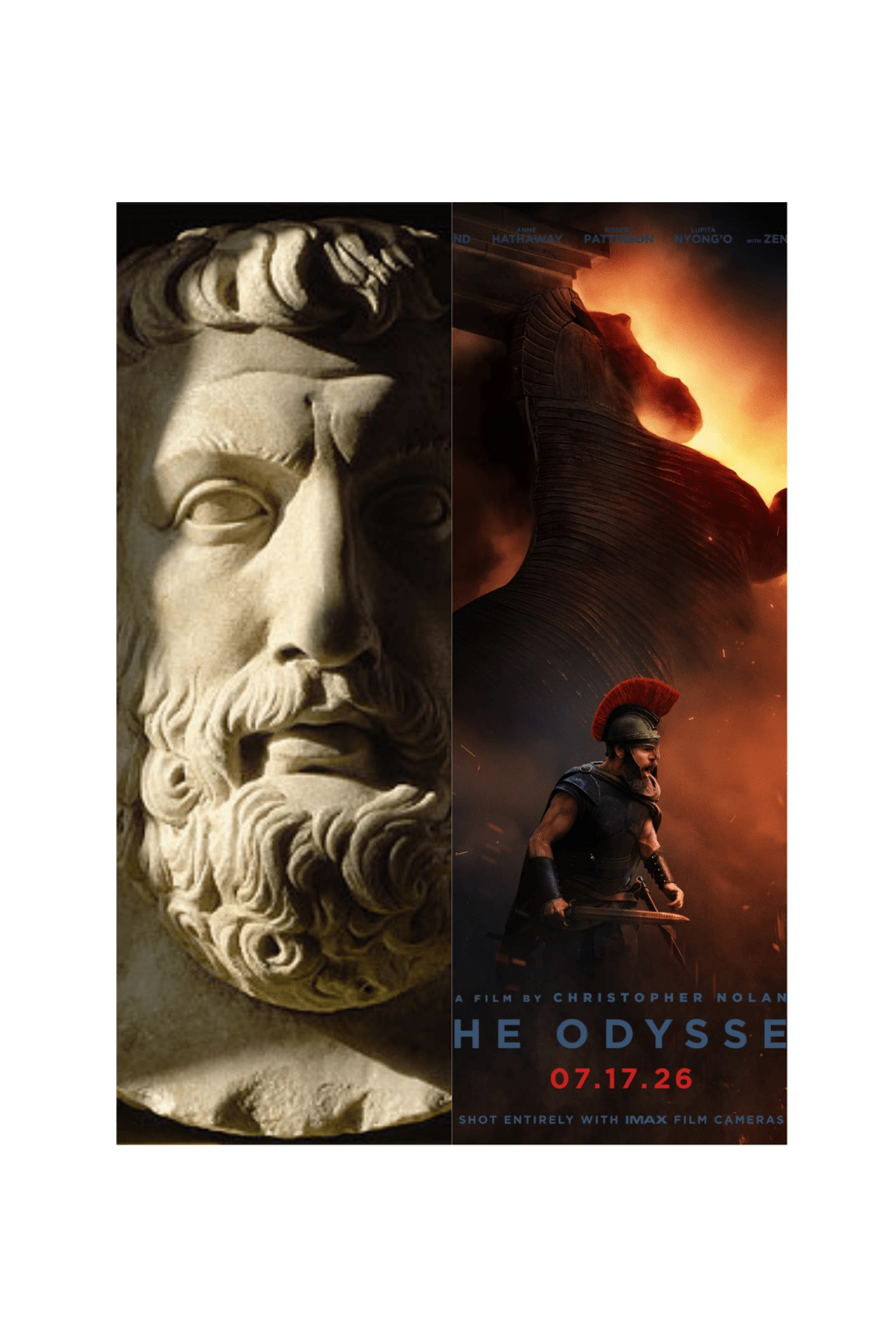
It’s The Odyssey season, and with so many conversations revolving around Helen of Troy, it’s the perfect time to revisit one of the ancient world’s most fascinating thinkers: Gorgias. Although he lived more than 2,400 years ago (ca. 480-ca. 380 B.C.E), his ideas about language and persuasion remain remarkably relevant today.
Gorgias was one of the most influential Sophists (traveling teachers of rhetoric and persuasion in ancient Greece) and a celebrated rhetorician. But for him, rhetoric wasn’t simply about speaking well or winning arguments. He believed that language has the power to shape how people perceive reality. Words don’t merely describe the world; they influence what we believe, how we feel, and ultimately how we act.
One of his best-known works, Encomium of Helen, offers a surprising defense of Helen of Troy. Rather than blaming her for the Trojan War, Gorgias asks readers to reconsider the story they think they know.
What if Helen wasn’t entirely responsible? What if she was persuaded?
Gorgias argues that if Helen was moved by persuasive speech, then she should not bear the full blame for her actions. To explain this, he compares speech to pharmaka (a Greek word meaning medicine or drugs). Just as medicine can heal or poison the body, words can comfort, persuade, inspire, deceive, or overwhelm the mind. Language has the power to reshape perception and influence judgment, sometimes leading people to act in ways they otherwise would not.
More than two millennia later, Gorgias’ insight remains relevant.
Every day, we encounter persuasive messages on social media, in political campaigns, through news headlines, and increasingly through AI-generated content. We often form opinions based on carefully framed narratives long before we have the opportunity to verify the facts.
Consider AI-generated images. During major world events, fabricated images can spread across platforms within minutes, attracting millions of views, comments, and shares. Even after fact-checkers reveal that an image is fake, the correction rarely reaches as many people as the original post. The first impression often lingers.
The conversations surrounding Christopher Nolan’s adaptation of The Odyssey offer another example. Much of the public discussion has focused on race, representation, and casting choices. Some people celebrate those choices, while others criticize them. Yet many of these conversations began before audiences had even seen the film! Opinions are shaped by promotional images, headlines, short clips, and, perhaps most importantly, by the reactions of others.
Those reactions rarely remain isolated. They are reposted, quoted, turned into videos, discussed on podcasts, and repeated across comment sections. Over time, they begin to shape broader public narratives; not only about the film itself, but also about mythology, history, authenticity, race, and representation.
Whether you agree or disagree with Nolan’s creative decisions isn’t really the point. The more interesting question Gorgias might ask is this: How does persuasive discourse shape public opinion before people have even encountered the thing being discussed?
Perhaps that’s the enduring lesson of Encomium of Helen: words are powerful. The rhetoric you encounter every day through social media, AI-generated content, news, and even conversations is doing something to you. It is shaping how you think, what you believe, and sometimes even how you act. At the same time, whatever you produce and share also has an impact on others. In the end, it’s about being mindful and critical of both what we consume and what we contribute.
In other words, before you become a keyboard warrior defending a claim or sharing a post, make sure it is actually true. Engage the original source, think critically about the rhetoric at work, and remember that your words have the power to shape someone else’s understanding of the world just as someone else’s words have shaped yours.
Historical information about Gorgias is drawn from Bizzell, Herzberg, and Reames (2020)






Leave a comment