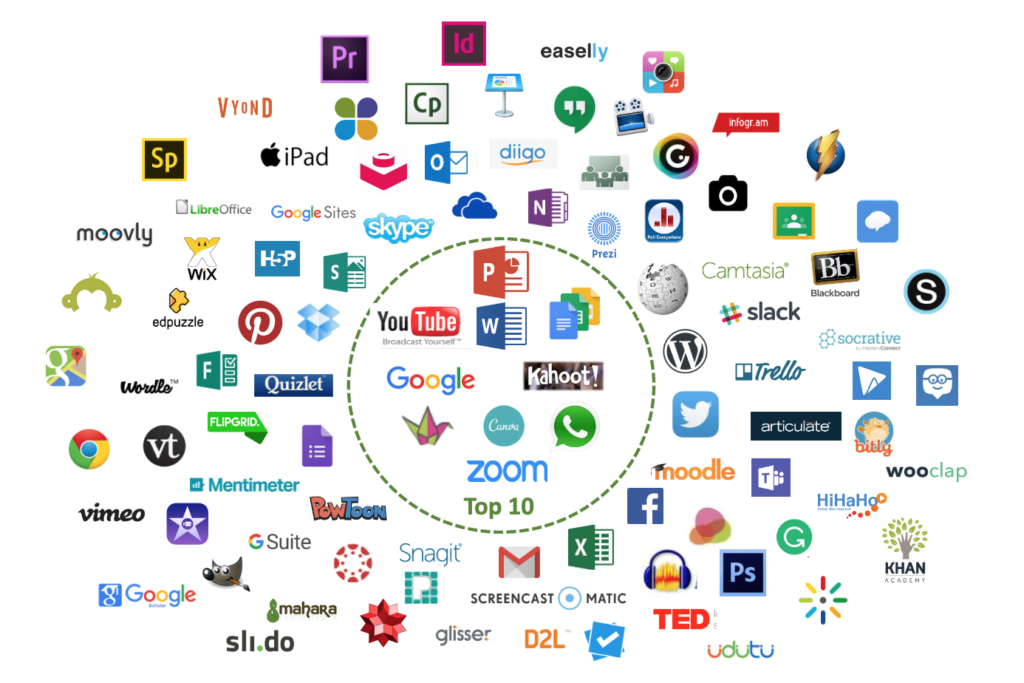
I have just finished drafting my proposal for CCCC 2027, which is probably why futures has found its way into the title of this post. But really, this is less about the future and more about the present. It is about the digital tools we use in our classrooms and the quiet pressure, both imposed and internal, to keep up.
There is always something new.
A new platform.
A new tool.
A new way to teach writing.
And somewhere along the line, “new” begins to feel like a requirement rather than a choice.
I was recently at a talk where I watched a digital tool almost derail what could have been a powerful presentation. The speaker had just introduced the tool to their students, and it was clear they felt the need to use it themselves. To model it. To embody it. To practice what they teach. But the tool did not cooperate. There were glitches, delays, and awkward pauses. In that moment, something shifted.
The speaker’s expertise, their clarity, their presence, and their ability to compose meaning in real time were overshadowed by the tool. I found myself wondering if the presentation would have been more impactful if they had used something more familiar. Something that allowed them to focus fully on delivery rather than troubleshooting.
It raised a simple but important question: When does a tool support writing, and when does it get in the way of it?
In educational spaces right now, there is a visible intensity around digital tools, especially with the rise of AI. Conversations are everywhere about efficiency, productivity, and innovation. As instructors, scholars, and researchers, it can begin to feel like we are in a race. A race to adopt, to integrate, and to demonstrate that we are current and forward thinking.
But to what end?
If a tool genuinely makes the work better, more accessible, more meaningful, more responsive, then it has value. But new is not always necessary.
I felt this tension again while working on some qualitative data. At one point, I paused and wondered whether I would have felt more at ease coding on paper. There is something about the slowness of it, the tactile engagement, the ability to sit with the data without toggling between screens or managing software features.
At the same time, digital tools offer things paper cannot. They make it easier to organize, to search, and to scale. So the issue is not about rejecting digital tools. It is about being honest about what they ask of us and what they take away.
Sometimes, in trying to keep up with what is new, we move too quickly away from what already works.
And in writing instruction, that matters.
Because writing is not just about output. It is about process. It is about thinking. It is about presence. When tools begin to interrupt that, when they demand more attention than the act of composing itself, we need to pause.
We need to ask ourselves: Are we choosing this tool because it serves our pedagogy?
Or because we feel we are supposed to?
Writing futures are not shaped by tools alone. They are shaped by the decisions we make about how writing is taught, valued, and experienced. Sometimes, the most forward thinking choice is not the newest tool in the room. It is the one that allows writing to happen most fully.






Leave a comment