This page is dedicated to celebrating the inspiring feedback and thoughtful reflections shared by my students. Here, you’ll find expressions of appreciation, personal insights, and meaningful acknowledgments that highlight our shared journey in learning and growth.
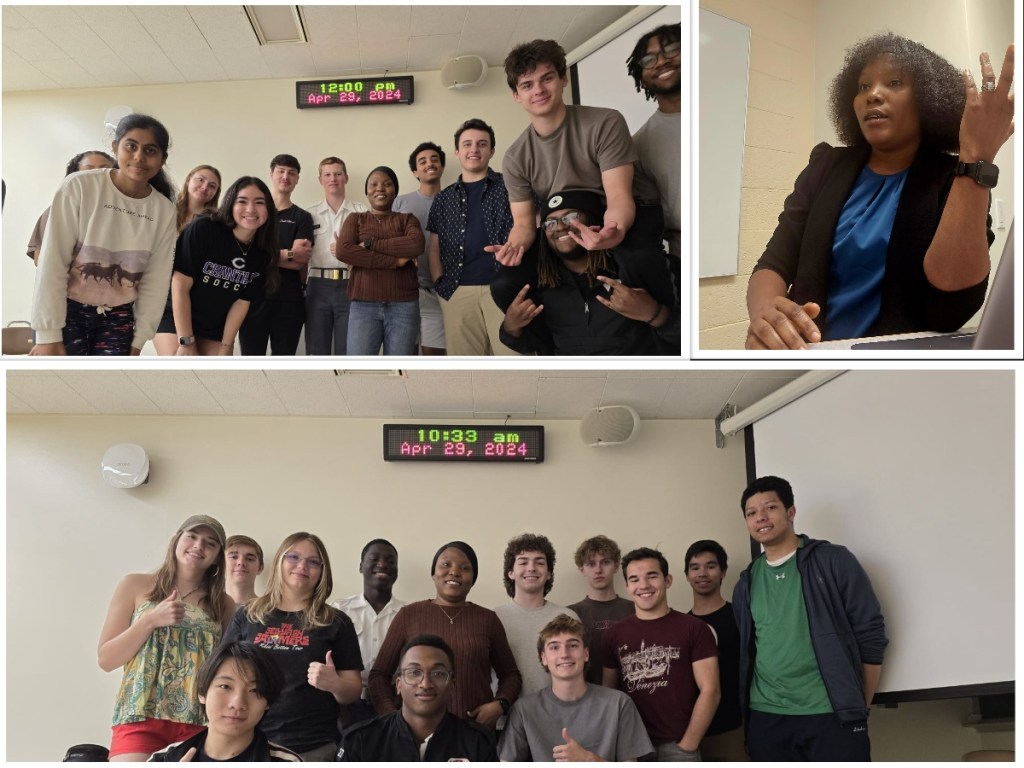
Dear Ms. Ojedele,
To begin, I have greatly enjoyed being a part of your First-Year Writing course. It has been a journey, but a journey well taken. I would like to thank you for your support throughout this learning process and your patience. I came into the classroom on day one not with very high expectations, but your style of personally engaging with your students really changed the learning experience for the better. I appreciate it when you make all screens be closed and eyes go onto you. That makes it much more meaningful and personal and a much more enjoyable atmosphere for all.
Sincerely,
R. A.
Dear Ms. Ojedele,
First, I would like to thank you for being my English 1106 teacher. I know there is a lot that goes into it behind the scenes, and I want you to know that has helped me learn a lot about research- based writing.
B. H.
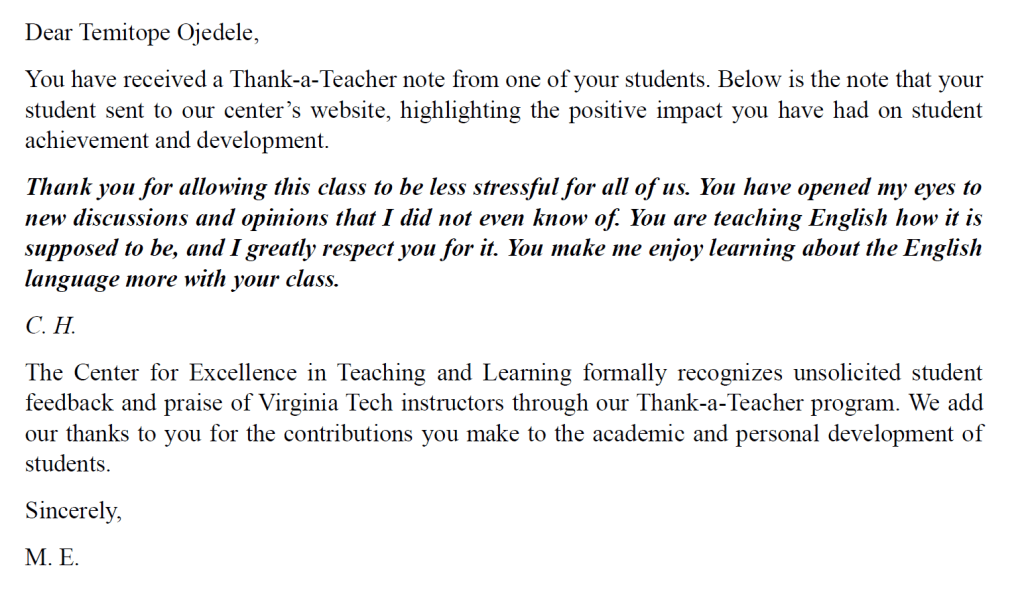
Dear Ms. Ojedele,
I hope this letter finds you well. As the end of the semester approaches I wanted to take a moment of your time to express my gratitude for your guidance. Coming into this class, I didn’t know what to expect as my last English class (1105) did not align with my expectations. However, your commitment in making sure your students all succeeded inspired me. As I look back on the progress I’ve made this semester, I am very much grateful for having the opportunity to learn from you and my classmates. The amount of knowledge I’ve gained from your class will serve me in my future academic and professional endeavors.
Very Sincerely,
E. C.
Dear Ms. Temitope Ojedele,
First, I would like to thank you for helping me write this research paper. As a first-year student, I did not know how to write a basic research paper. But with your guidance I learned how to develop a good research paper. The information on the class slides, Brooke notes, peer review, extra feedback, and group discussions in your class gave me an idea of how to come up with a good first draft and refine it. Without your assistance I would not have been able to develop a research paper. Thank you.
Sincerely,
S. S.
Dear Ms. Ojedele,
I would like to begin by thanking you for a semester of in-depth and careful academic instruction. Your support throughout this research and writing process has been solid and dependable, something I wish all first-year writing students could say about their instructors.
V. R.
Dear Ms. Ojedele,
I would like to take this opportunity to thank you for aiding me in this course, not only by holding valuable lectures and discussions, but also for incorporating effective assigned tasks within the course.
Sincerely,
A. E.
Dear Professor Ojedele,
Firstly, I would like to thank you for your efforts towards teaching us the material and tactics on how to write a research paper effectively. Your efforts will help me later on as I continue my journey as a science major since I will have to make many more research papers later on in my college career. I hope to use the skills and knowledge you taught me further on not only in school, but later in my professional life as well.
Sincerely,
M. C.
Dear Ms. Ojedele,
I want to express my thanks to you for your great teaching and dedication during the past four months. Your sincerity and dedication to the students was conveyed to me. Throughout this time, I have worked on many projects that have helped me improve my research skills and my ability to analyze texts. In particular, I could see myself growing more intellectually and literature through this study.
Sincerely,
Y. Y.





 Tèmítọ́pẹ́ Ọ̀jẹ́délé-Adéjùmọ̀