
I was thinking about my grandma today. It’s been two years since she left us. The thoughts were about how she was one of my favorite people. How she would call me “Toppy-Toppy” in her sonorous soprano voice. How she made sure I was the first to get to school that one year I lived with her and attended the last class of my primary education. How she would make sure I was super tidy, socks very white and uniform clean and well ironed. How she would give me some of her food after I had already had mine. Her sumptuous jollof rice. How she teased me about building her a house when she learnt I was doing a side job after my secondary education and awaiting college admission. Her Sunday afternoon egusi soup. Her devotion to God.
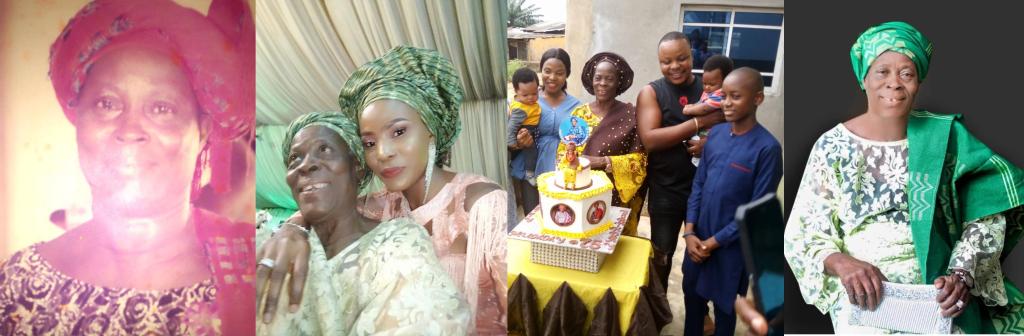
That’s all that’s left to me. The memories. This time they no longer make me cry; they are cherished and consolatory. They are memories that often end with deep sighs and “na wa o” (a Nigerian phrase that signals helplessness, frustration, or resignation). It serves the resignation part for me. A resignation that I end up with after thinking about how the human life is infinite and at the same time abruptly finite. The infiniteness of human life is marked by the complexities of our living. Our inventions, the way we love, the way we navigate material spaces. And our sad finite nature is the abrupt end that comes after these infinite capabilities.
Back to resignation. It becomes a way of practicing repair. Of understanding that in all our infinite capabilities, there are things we have no control over. Of pushing down hurts and regrets of what could have been. Of waking up every new day to newer, complex possibilities and realities until we too reach our finite point.
Sun re o, Mama Ijebu.




 Tèmítọ́pẹ́ Ọ̀jẹ́délé-Adéjùmọ̀
Leave a comment