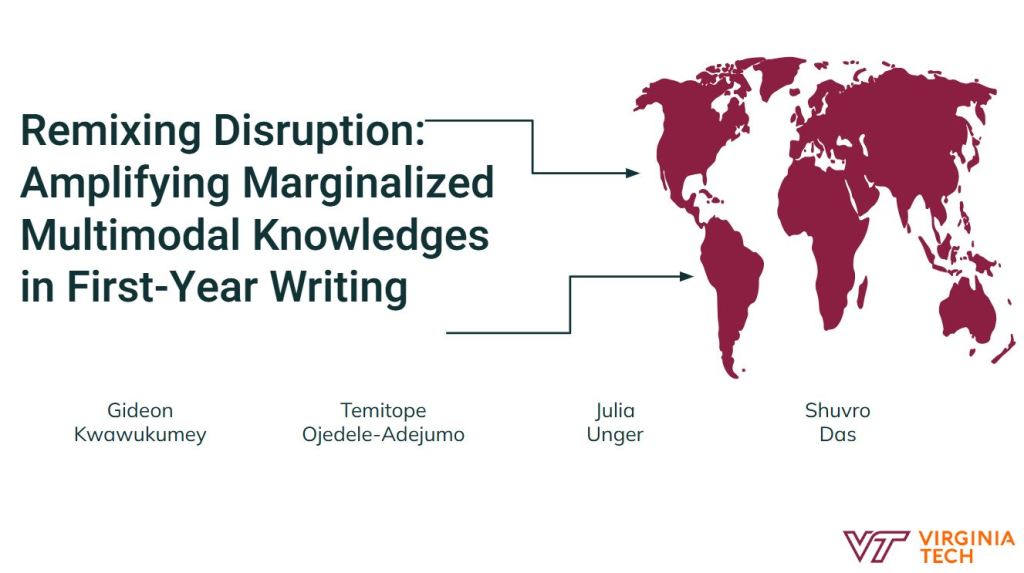
In an era marked by rapid technological advancements and the formation of coalitions across borders and intersectional identities in academic and professional spaces, we introduce the concept of coalitional divides to illuminate the disparities inherent in intellectual assemblages as influenced by technological biases. Coalitional divides refer to the inequalities that exist between different groups or communities within a singular spatial and intellectual group, particularly in terms of access to resources, opportunities, and representation. These divides can be attributed to various factors such as race, ethnicity, gender, socioeconomic status, and, in the context of this panel, international identity, which are often intensified by the biases embedded in emerging technologies.
You may read the published extended abstract here.
Storying ASR
Presenting at a prestigious conference was a significant milestone for me, reflecting months of dedicated work with my professor and colleague on a project deeply rooted in human values and social justice. As an African international student in the United States, I was enthusiastic about sharing our findings with a like-minded audience. Slotted last on the panel, I approached the presentation with excitement, buoyed by a previous solo presentation success. However, the panel’s requirement to use a single laptop with an Automated Speech Recognition (ASR) program for closed captioning presented an unexpected challenge. Speaking quickly to cover all points, I noticed a disconnect with the audience. In an effort to address the issue, the moderator stepped in, adjusted the microphone, and suggested that I “move closer to the mic to be more audible.” The real issue, however, was that the ASR system favored American accents and struggled with my Nigerian accent. This bias shifted the focus of the communication problem onto me, rather than highlighting the inherent flaws in the ASR design, resulting in a form of exclusionary othering that impeded effective communication.
Technology & Linguistic Diversity
This experience illustrates the broader challenge of technology’s interaction with linguistic diversity in academia. It aligns with Lawrence’s (2021) research on discrimination against accented speakers, enriching my understanding of the pressures to conform to “standard English” in Western academic settings. The biases against my African accent, reflecting both racial and linguistic prejudice, reveal the preference for Americanized articulation and how contributions can be undervalued based on accent.
Technology and “Non-Standard” Accents
The ASR technology’s failure to recognize “non-standard” accents underscores the assimilationist expectations in academic environments.
Call to Action: Addressing Accent Bias
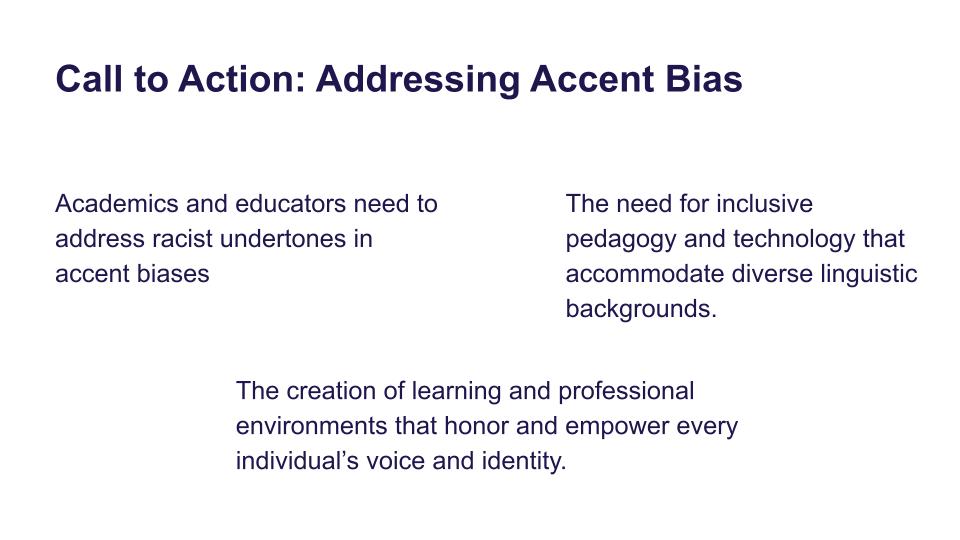
This situation urges academics and educators to critically examine and address the racist undertones embedded in accent biases. Emphasizing the importance of inclusive pedagogy and technology, it is imperative to foster an educational environment that respects and empowers every individual’s voice and identity.
Empowering Individuals: Autonomy in Technology Choice
Academic and professional participants should always have the autonomy to make choices about using certain technologies, especially when such technologies could compromise their communication process due to hegemonic designs. Ensuring that technological advancements do not perpetuate imperialistic biases but instead celebrate diversity and promote equity is crucial.





 Tèmítọ́pẹ́ Ọ̀jẹ́délé-Adéjùmọ̀
Leave a comment